

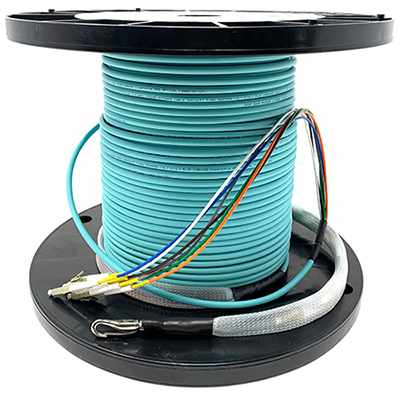
Pre-terminated fiber optic assemblies have become a preferred solution for fast, reliable, and simplified network installations. Whether you are upgrading a data center, building a new structured cabling system, or expanding network capacity, Choosing a Pre Terminated Fiber Optic Assembly Tutorial is essential for long-term performance, reduced downtime, and scalability.
1. Determine Your Fiber Type
Choosing the correct fiber type is the starting point for any installation.
Common options include:
Singlemode Fiber (OS1/OS2)
Ideal for long-distance, high-bandwidth applications such as campus or metro networks.
Multimode Fiber (OM1, OM2, OM3, OM4, OM5)
Best suited for shorter-distance, high-speed data center links.
Tip: Brands like Corning offer high-quality low-loss fiber options widely used across professional installations.
2. Choose the Connector Type
Connector selection directly impacts compatibility and insertion loss.
Popular connector types include:
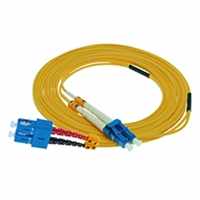
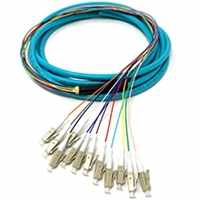
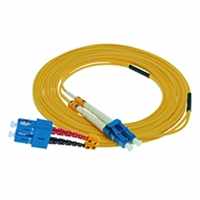
LC – Compact and suitable for high-density deployments
SC – Simple push/pull type, commonly used in enterprise networks
MTP/MPO – Multi-fiber connectors ideal for high-bandwidth parallel optics
Ensure the connector type matches your patch panels, transceivers, or network equipment.
3. Specify the Fiber Count and Configuration
Different applications require different fiber counts:
2 to 12 Fibers: For typical networking runs
24 to 144+ Fibers: For high-density data center backbones
Also consider duplex vs. simplex needs, breakout configurations (e.g., MTP to LC), and polarity.
4. Measure the Cable Length Accurately
Accurate length reduces excess slack while preventing tension on the cable.
A. Include vertical and horizontal distances
B. Add slack for routing, bends, and termination spaces
C. Use pre-measurement tools or mapping software for accuracy
Most reputable brands, including Corning and Panduit, offer custom lengths for precision installations.
5. Consider Cable Jacket Type and Environment
The environment determines the jacket rating:
Plenum (OFNP): For indoor air-handling spaces
Riser (OFNR): For vertical pathways between floors
Indoor/Outdoor: For building transitions
Armored: For protection against crush or rodent damage
Selecting the correct rating ensures compliance with safety standards and long-term durability.
6. Evaluate Performance Specifications
Key performance factors include:
Insertion Loss (IL): Lower IL ensures higher signal quality
Return Loss (RL): Higher RL means less reflected signal
Bend radius performance: Crucial in tight routing environments
High-performance assemblies from brands like Corning or Belden typically offer superior low-loss performance.
7. Verify Testing, Warranty, and Quality Assurance
A reliable pre-terminated fiber assembly should include:
Factory test results
Certification labels
Compliance with TIA/EIA standards
Manufacturer warranty
This ensures reliability and supports future troubleshooting.
8. Assess Your Installation Requirements
Some assemblies are designed for plug-and-play installations, while others require specific routing hardware. Consider:
a. Density and rack layout
b. Pathway supports
c. Patch panel compatibility
d. Future scalability
Good planning reduces rework and future upgrade costs.
Conclusion
Selecting the right pre-terminated fiber optic assembly involves understanding your environment, connector types, performance expectations, and installation requirements. High-quality brands like Corning and Panduit offer reliable options that ensure optimal network performance and longevity. For organizations looking for reliable pre-terminated fiber solutions, LANshack, custom assemblies, and professional cabling resources, one helpful service provider you can explore is LANshack.


Write a comment ...